Shop by Heritage

Victorian Velvet Perfume antique buttons

Victorian Velvet Perfume Buttons

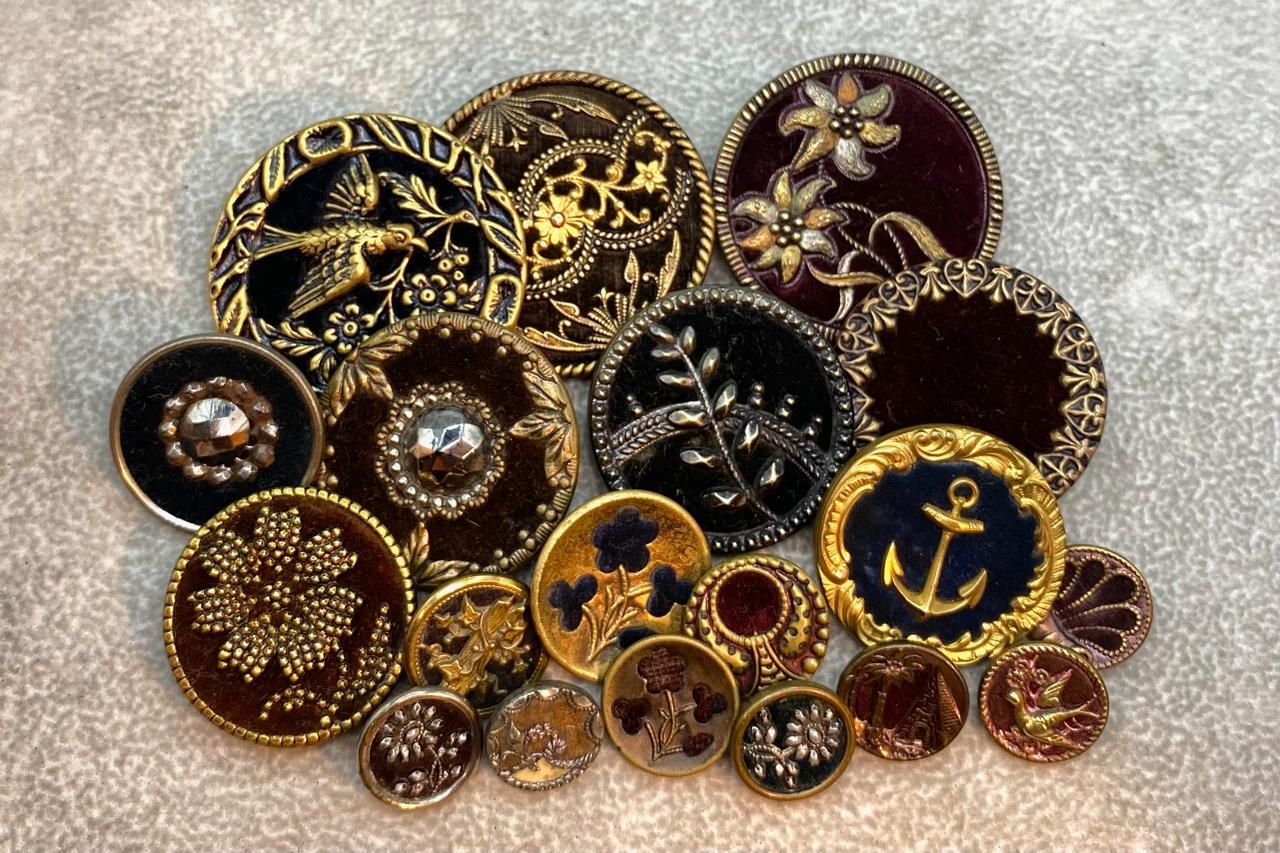
Victorian perfume buttons from the 1800s were small, decorative fasteners designed to hold and gently release fragrance without damaging delicate clothing. They typically featured an ornate metal front — often floral in design — layered over a soft, absorbent backing like velvet or felt, where a drop of perfume could be applied and warmed by body heat to diffuse scent throughout the day. Both practical and stylish, they functioned as garment closures and were often removed before washing due to their delicate construction. They also held sentimental value, especially during the Civil War era, when women gifted them to loved ones as a way to carry a comforting personal scent.

Shop Victorian Velvet Perfume →
Carved Shell & Pearl antique buttons

Victorian Carved Shell Pearl Buttons

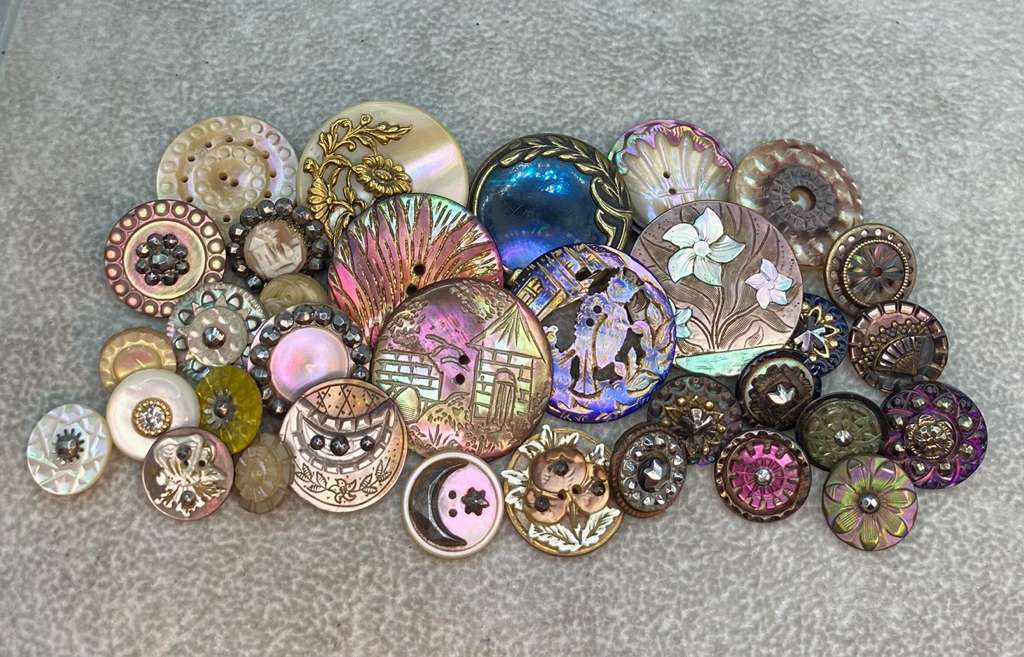
Victorian carved shell buttons, popular from the mid-to-late 19th century, were crafted from mother-of-pearl, oyster, and freshwater mussel shells, often featuring intricate and delicate engravings. They symbolized wealth, refinement, and sentimental fashion. Major manufacturing hubs in England and the United States — most notably Muscatine, Iowa — produced millions of these buttons before they were eventually replaced by synthetic plastics. Also known as “pearl buttons,” these were made from the iridescent shells. Early Victorian buttons were handmade, but by around 1850, machine-cut production became widespread. Skilled artisans in centers such as Birmingham, and later in the United States, carved, polished, dyed, and sometimes inlaid the shells to create decorative effects. Shell buttons were regarded as indicators of status and wealth.

Shop Carved Shell & Pearl →
Italian Micro Mosaic antique buttons

Antique Italian Micro Mosaic Buttons

Victorian Italian micro-mosaic buttons (c. 1800s) originated as luxury souvenirs for affluent Grand Tour travelers, featuring highly detailed, hand-set glass shards (tesserae). Primarily crafted in Rome and Venice, these tiny, intricate, and often romanticized Italian landscapes, floral, or ruin motifs transitioned from high-fashion jewelry to buttons by the mid-19th century. The technique began in the late 18th century as a miniaturization of Vatican mosaics, perfected by artists like Giacomo Raffaelli, aiming to make art accessible in small formats. Travelers in the 19th century bought these items as sentimental mementos of their time in Rome and Venice. Artists used thousands of tiny, colored glass pieces (filati) set into a base — often black glass, metal, or enamel — to create images that looked like paintings from a distance. Early pieces depicted ruins of the Roman Forum, while later Victorian, specifically mid-19th-century pieces, focused on intricate floral bouquets, birds, and insects.

Shop Italian Micro Mosaic →
Jeweled Celluloid antique buttons

Victorian Celluloid Buttons

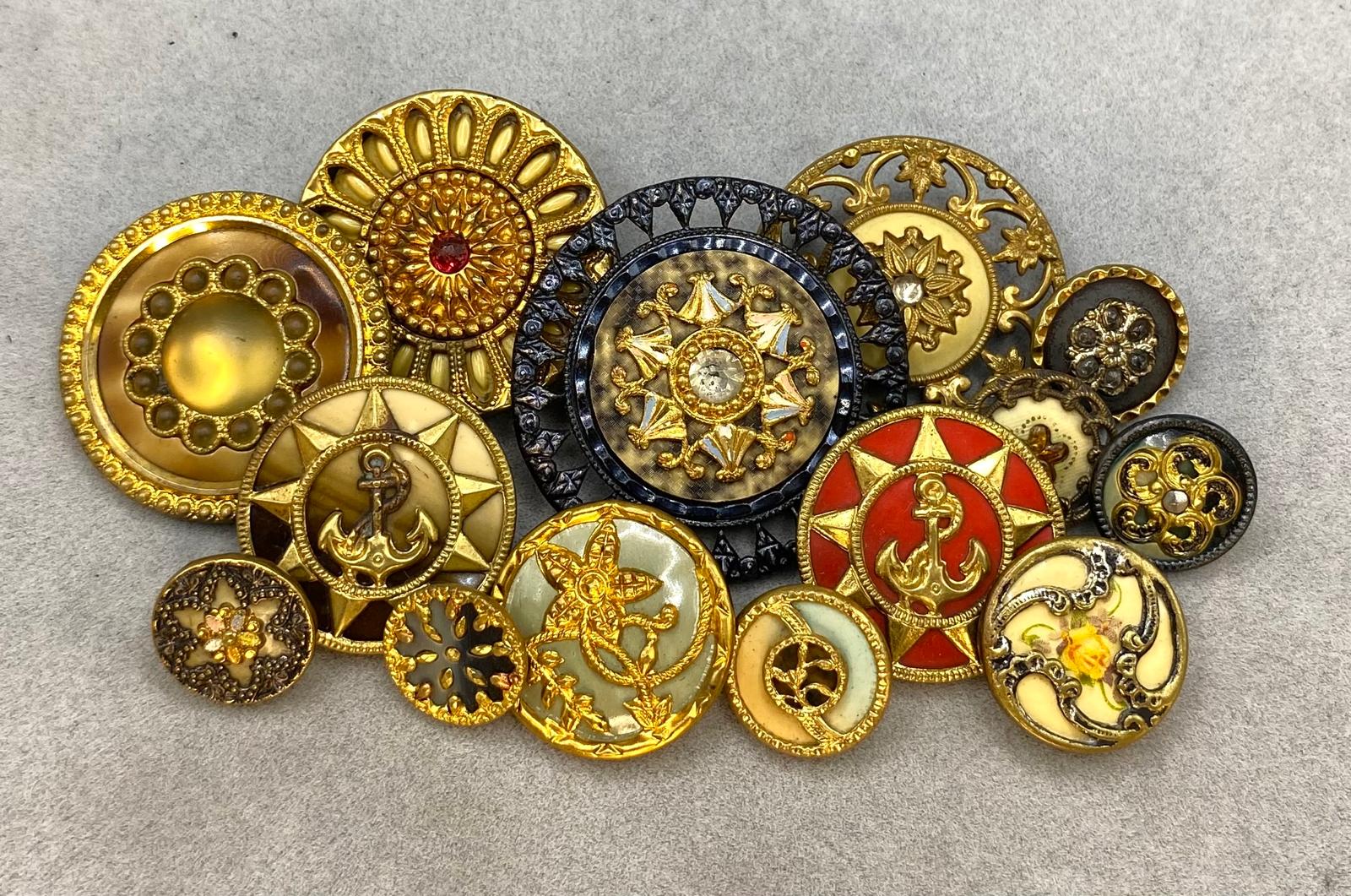
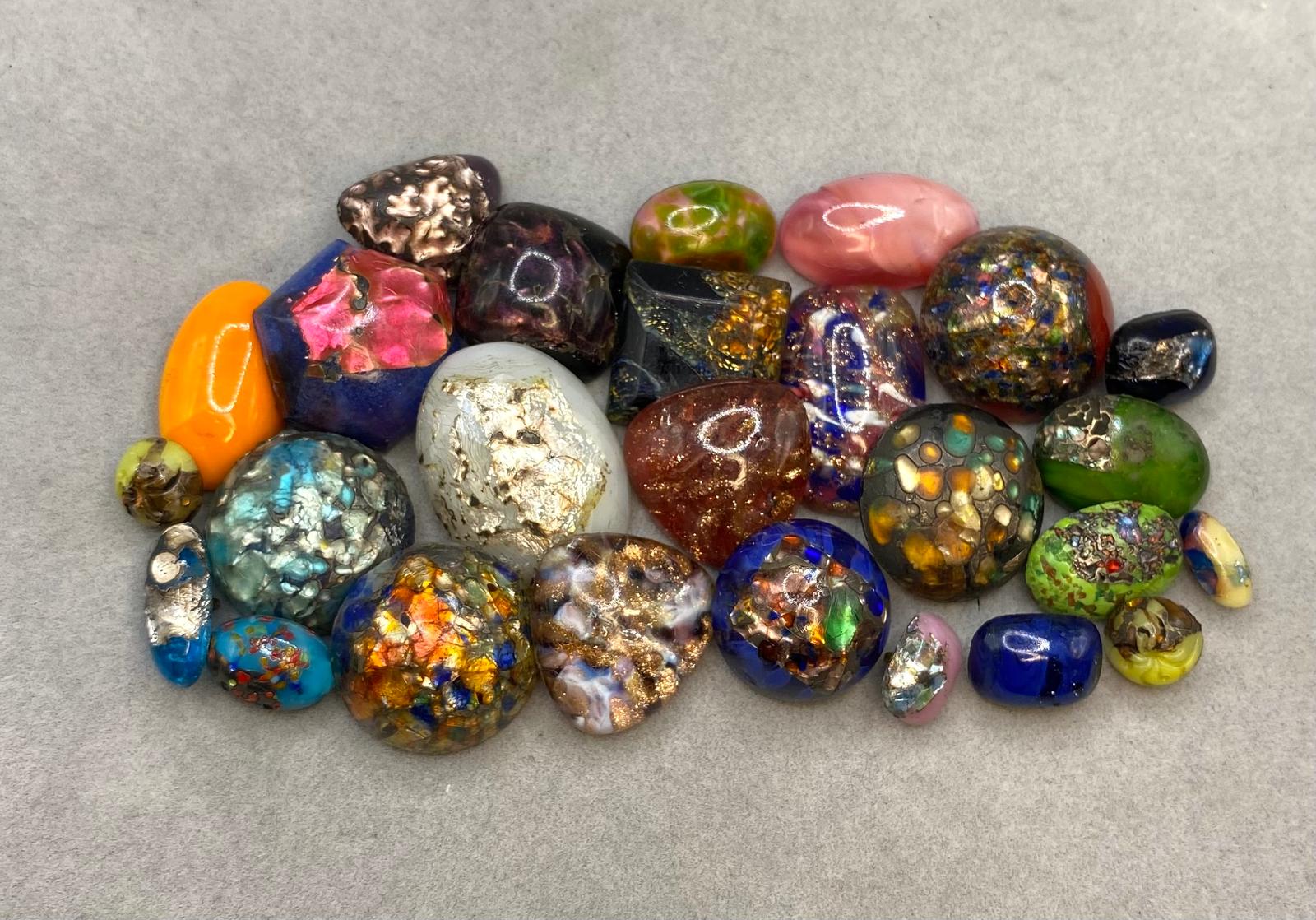
Victorian jeweled celluloid buttons, popular from the late 1860s through 1900, were early, lightweight plastic fasteners often made to imitate luxury materials like ivory or pearl. These buttons, characterized by inset glass “paste” jewels, were mass-produced in diverse colors, featuring intricate molding, painting, or “window” designs (clear layers over decorative inserts).

Shop Jeweled Celluloid →
Victorian Ivroid antique buttons

Victorian Ivroid Buttons

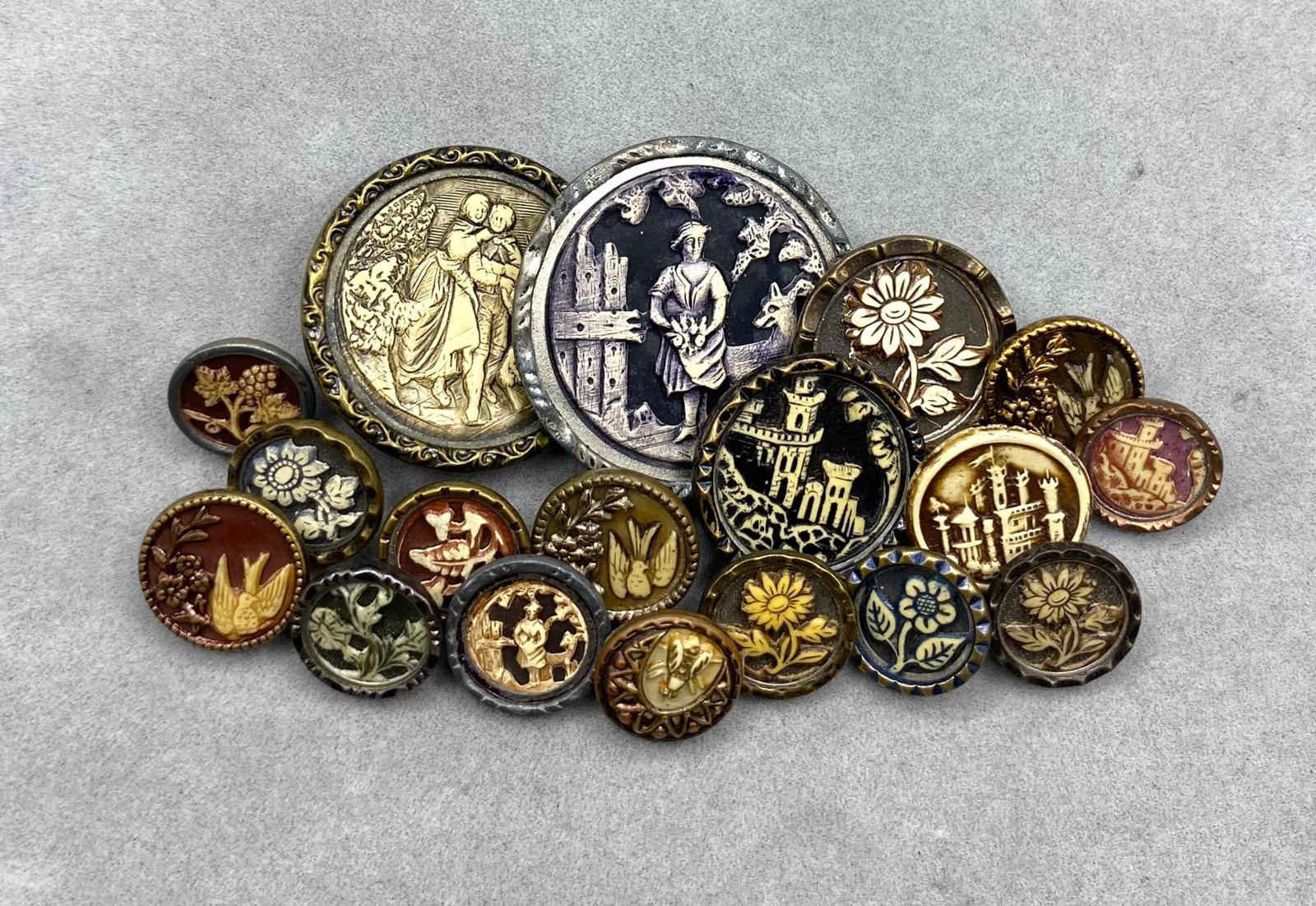
Victorian Ivroid buttons, often referred to as French Ivory, Pyralin, or Ivorine, emerged in the late 19th century as a popular, affordable, and durable alternative to genuine elephant ivory. These buttons were crafted from early celluloid, a plastic material developed around 1869, which could be molded, carved, and colored to mimic the look and feel of real ivory.

Shop Celluloid & Ivroid →
Victorian Picture Metal antique buttons

Victorian Picture Metal Buttons

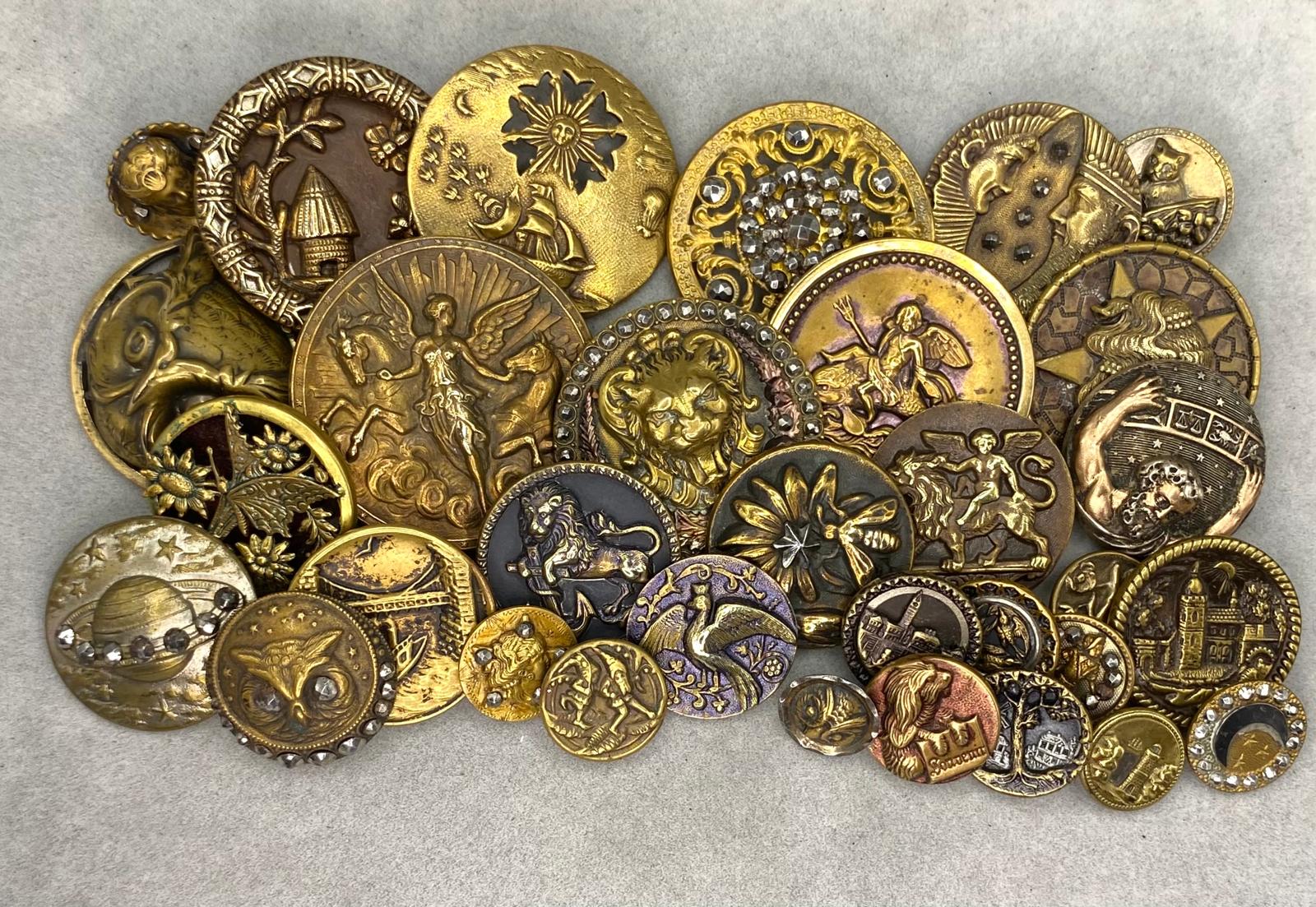
Victorian picture metal buttons, primarily produced between 1880 and 1900, are highly detailed stamped brass or alloy buttons depicting stories, scenes, or portraits. Serving as fashion statements and luxury items, they illustrated folklore, literature, and nature, often featuring intricate, three-dimensional relief designs. Many were stamped from brass, often featuring “cut steel.” Popular themes included scenes from opera (e.g., Gilbert & Sullivan), literature, mythology, and children’s fables. Nature and “Tussie-Mussie” designs frequently portrayed birds, insects, flowers, and foliage — “Tussie-Mussie” buttons depicted tiny bouquets, often holding symbolic meanings.

Shop Victorian Picture Metal →
Hand Painted Enamel antique buttons

Victorian Hand Painted Enamel Buttons

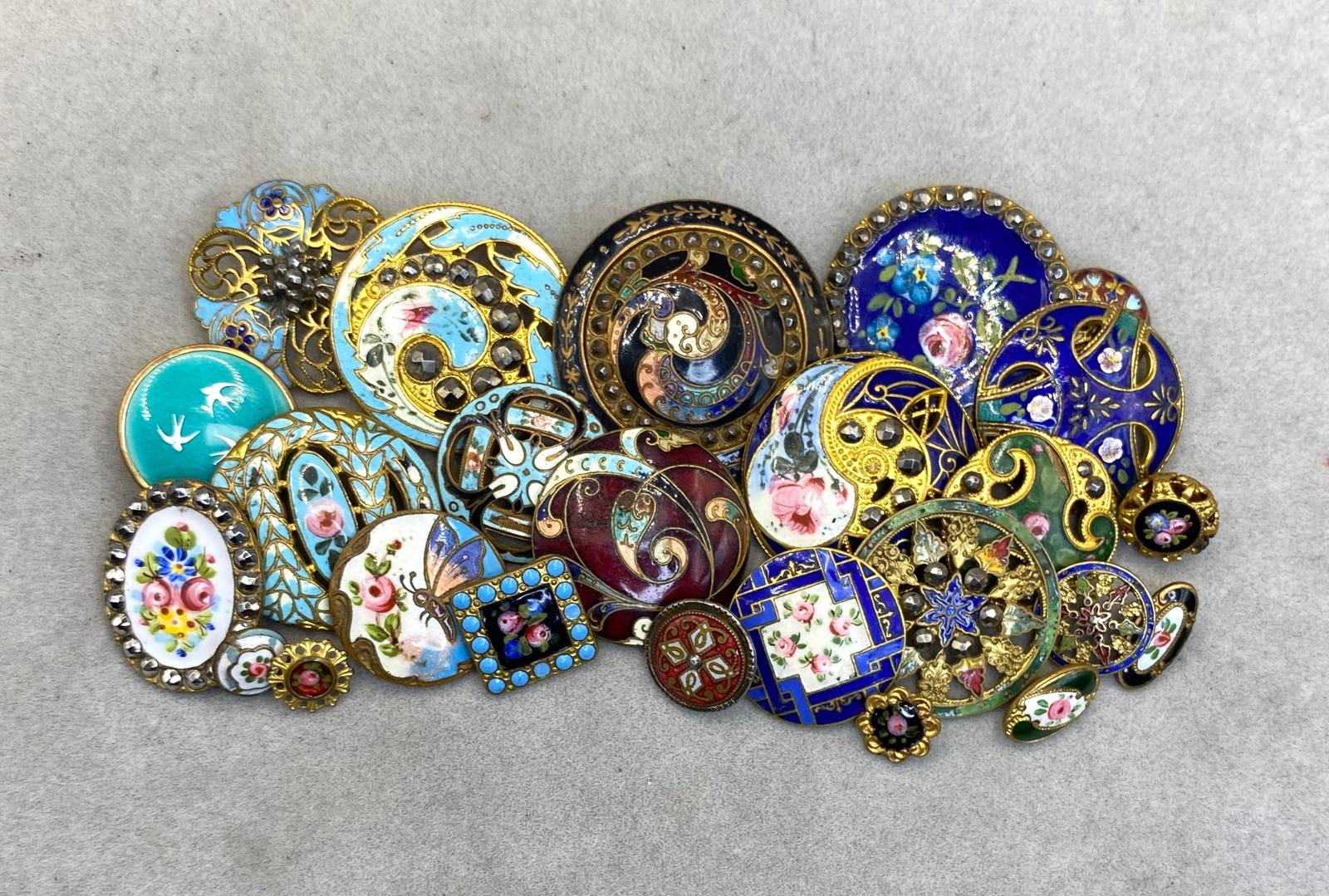
Victorian hand-painted enamel buttons (circa 1860–1910) were prized fashion accessories representing artistic miniature painting, often produced in Limoges, France. These buttons featured detailed scenes on metal or glass bases, showcasing portraits, flowers, and romantic scenes. They were a key part of the opulent, artistic dress trend. Production was primarily in Limoges, France. Common motifs included delicate flowers, mythological scenes, and portraits of women. They served as status symbols and reflected the Victorian passion for artistic expression and nature.

Shop Hand Painted Enamel →
Leo Popper Glass antique buttons

Antique Leo Popper Buttons

Leo Popper & Sons, established in 1880 in New York City, became famous for glass buttons produced using traditional Bohemian techniques that avoided modern machinery in favor of hand-pressed artistry. Leo Popper was born in Bohemia in 1831. He immigrated to the U.S. in the mid-1800s, opening Leo Popper & Sons in NYC. The Poppers never used machines — buttons were made using heavy iron hand presses and expensive stock molds, ensuring each piece felt substantial and artisan-made. They are most famous for colorful glass featuring “rainbow metallic inclusions” or “gorgeous veins of silver” running through them. Leo Popper and son repaired the torch for the Statue of Liberty, and beyond buttons, the firm provided glass for L. C. Tiffany & Co. and contributed decorative glass to landmarks like the Cathedral of St. John the Divine.

Shop Leo Popper Glass →
Glass in Metal antique buttons

Victorian Glass in Metal Buttons

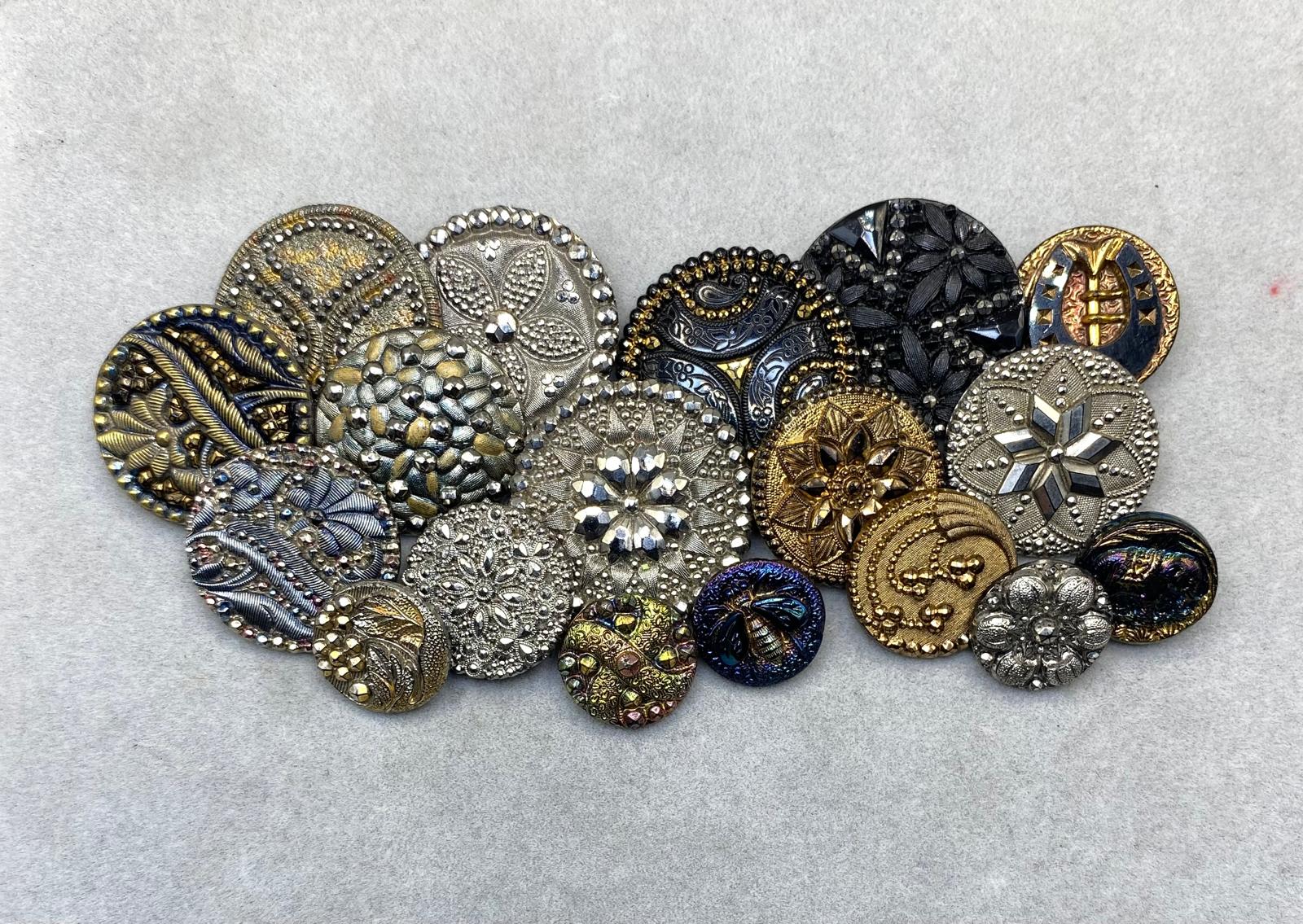
Victorian glass-in-metal buttons, popular from the 1840s–1900s, were primarily driven by fashion trends and mourning customs, with high-quality pressed glass — often black, milk, or iridescent — set into metal rims or featuring metal shanks. Production peaked in Bohemia (modern Czech Republic), utilizing advancements in press-molding to create intricate, affordable, and luxurious designs. The epicenter of production was Jablonec nad Nisou (Gablonz), producing intricate, pressed glass often featuring metallic, iridescent “carnival” looks.

Shop Glass in Metal →
Lacy Glass antique buttons

Victorian Lacy Glass

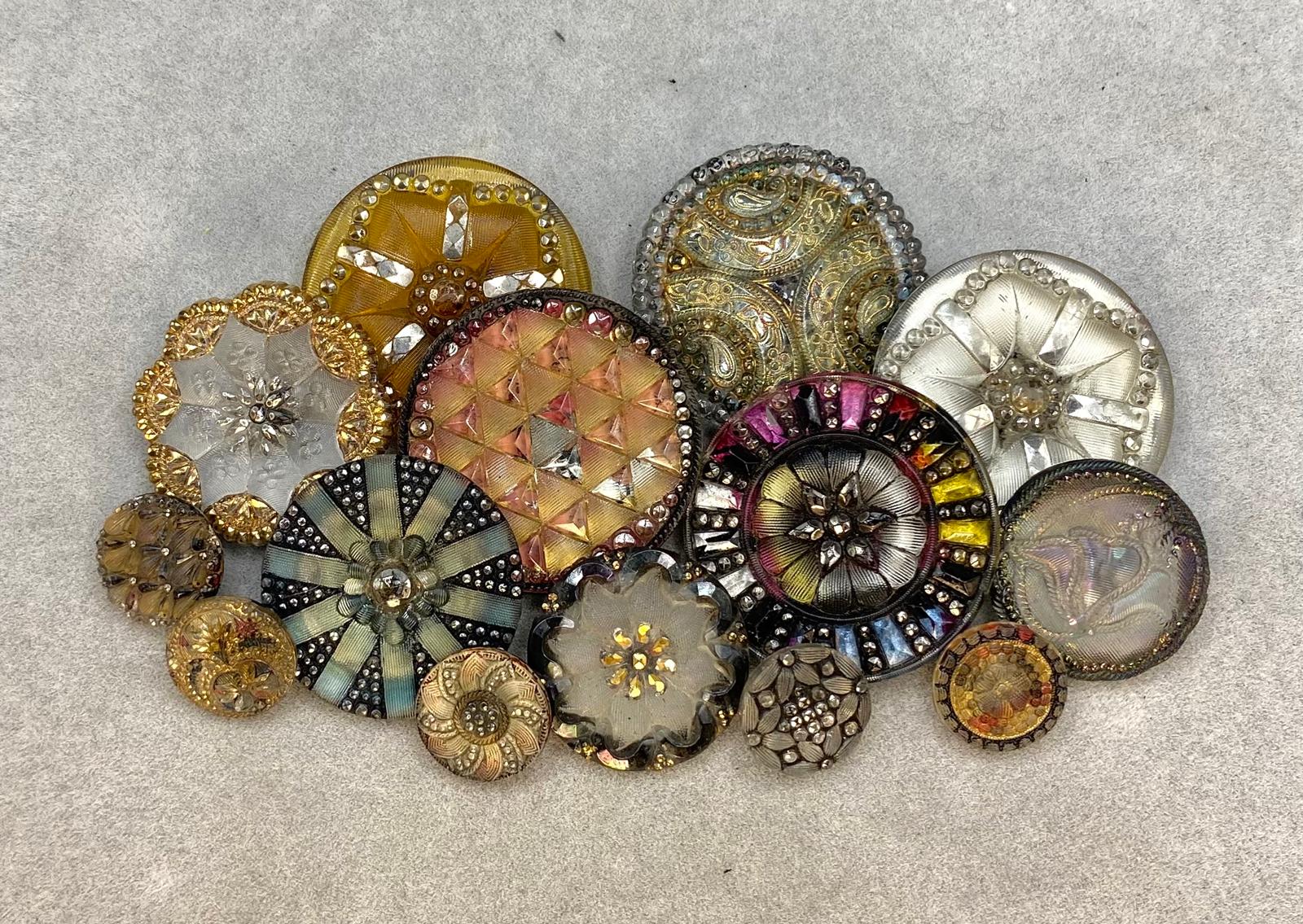
Victorian lacy glass buttons, popular from roughly the 1880s to 1900s, are intricate, pressed-glass buttons often featuring delicate, openwork designs resembling lace, frequently produced in Northern Bohemia. Buttons were primarily crafted in the Gablonz (Jablonec) region of Northern Bohemia (now the Czech Republic). These were produced between the 1880s and early 1900s, peaking during the late Victorian and Art Nouveau periods. They were used extensively on Victorian fashion, including cloaks, capes, and dresses, serving as both fasteners and ornamental jewelry.

Shop Lacy Glass →
Lustered Glass antique buttons

Victorian Lustered Glass Buttons

Victorian lustered glass buttons, often produced between roughly 1860 and 1914, emerged as a popular, affordable alternative to expensive jet jewelry during the height of Queen Victoria’s mourning fashion. These buttons, primarily manufactured in Bohemia (now the Czech Republic), were characterized by pressed black glass adorned with metallic, iridescent, or colorful luster coatings. Bohemia was the center of button production, with many small factories using steam power to press molten glass into intricate molds. After being pressed, the black glass was frequently hand-finished with a metallic luster coating, appearing in gold, silver, copper, or iridescent rainbow effects.

Shop Lustered Glass →
West German & Czech Glass antique buttons

Vintage West German & Czech Republic Glass

Vintage West German glass buttons were produced primarily between the late 1940s and the 1960s. These buttons emerged as a major industry following World War II, when many glassmakers from Northern Bohemia (now the Czech Republic) resettled in the Neugablonz area of Bavaria. Many feature silver or gold luster finishes, “moonglow” effects, and “aurora borealis” (AB) finishes that create a shimmering, rainbow effect. Vintage Czech glass buttons, primarily produced in the Jablonec nad Nisou region (Bohemia) since the 18th century, are renowned for their intricate, hand-pressed designs and luster finishes.

Shop West German & Czech Glass →
Hand Painted Satsuma antique buttons

Antique Hand Painted Satsuma Buttons

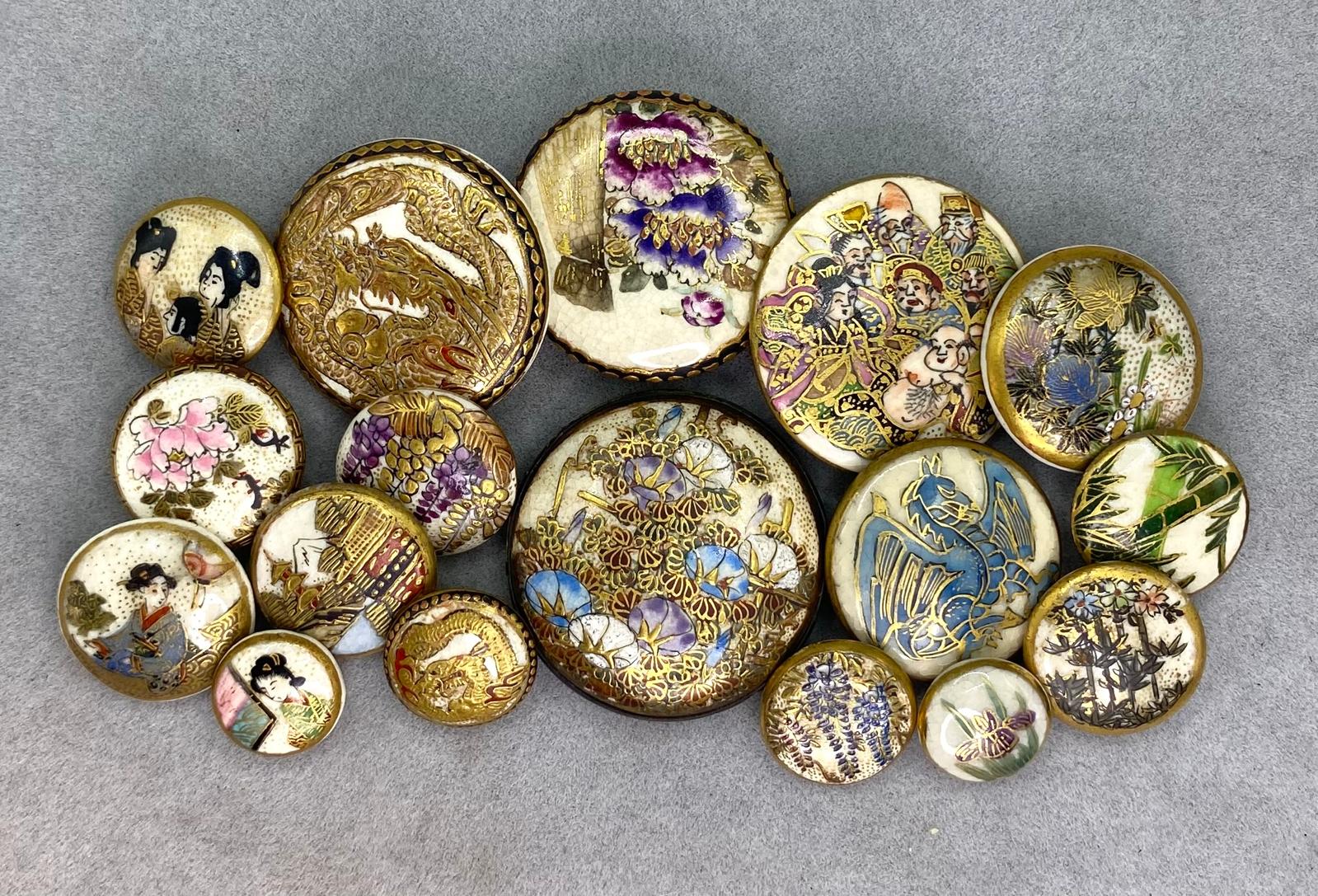
Antique Satsuma buttons are highly detailed, hand-painted Japanese ceramic buttons produced primarily from the mid-19th century to the early 20th century, particularly during the Meiji period (1868–1912). Originating from Kagoshima (Satsuma Domain), these tiny, intricate works of art were primarily created as luxury export items for Western markets, featuring fine gold detailing, crackle glazes, and natural or mythological motifs.

Shop Hand Painted Satsuma →
Toshikane Arita antique buttons

Toshikane Arita Buttons

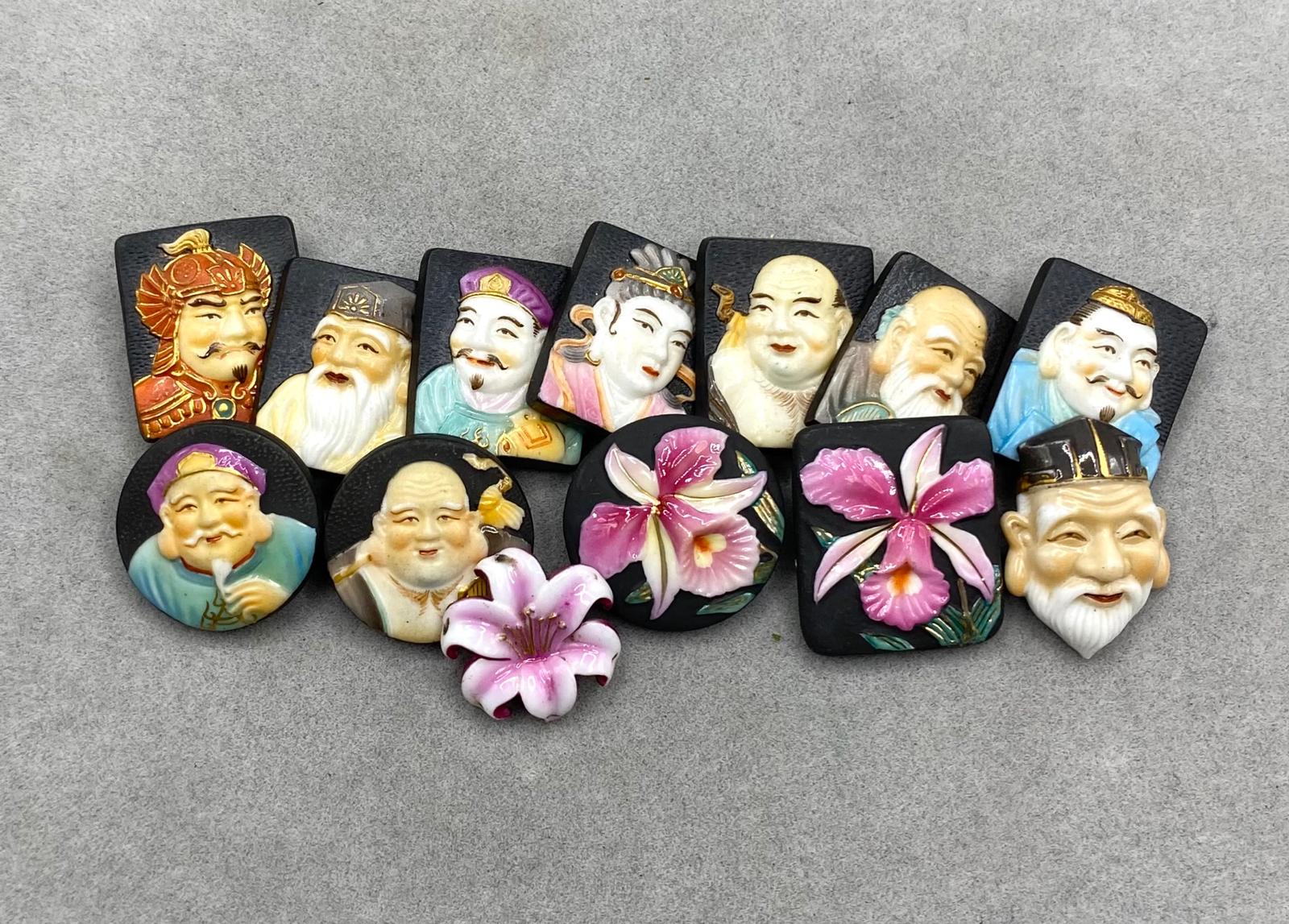
Toshikane produced from the 1930s to the 1960s in Japan, are highly collectible hand-painted Arita porcelain items featuring detailed, 3D Japanese motifs like the Seven Gods of Fortune. Founded in 1930, the company shifted from sash clips to buttons, gaining popularity as souvenirs for Westerners via military Base Exchanges.

Shop Toshikane Arita Buttons →